Getting Your Students Off the Math Anxiety Rollercoaster
April 29, 2026

April 29, 2026
By Jennifer Feehan
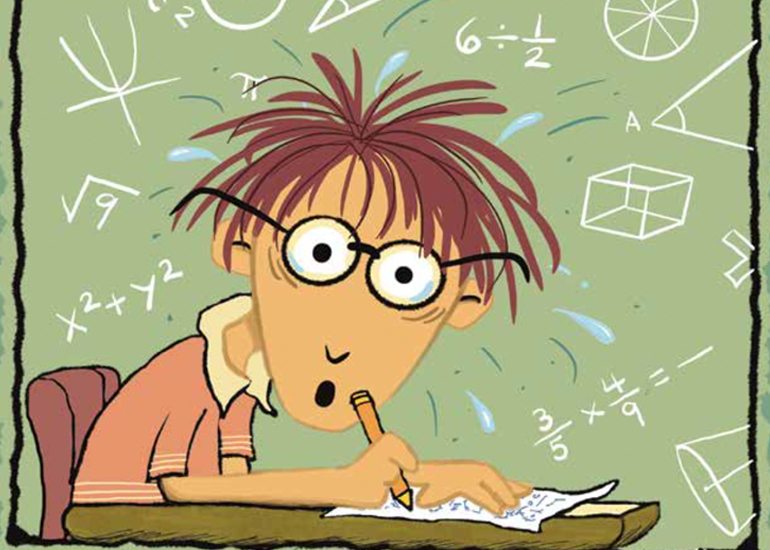
For many students, math class feels like a rollercoaster they’re forced to ride. There’s the slow, shaky climb as they first try to understand concepts and then the sudden drop: quizzes, tests, word problems, homework. Their stomachs lurch, confidence plummets, and before they know it, they are bracing for every class like it is a thrill ride gone wrong.
What if teachers could redesign the ride? What if we can swap fear for fun, confusion for curiosity, and help move from clinging to the safety bar to throwing hands up in victory? Here are a few powerful shifts that can start that transformation:
Acknowledge the fear. Many students will openly say that they don’t like math, but what many of them mean is that they’re anxious about their ability to understand it. We should recognize and validate their feelings, which will help build trust and open the door for progress. Let students know that it’s okay to be nervous about math class; it’s a normal reaction to be frustrated when a topic is difficult. Share that anxiety is common and that it doesn’t mean that they can’t understand math. Actively questioning students struggling with a concept will help, as well. Instead of saying, “What’s wrong?”, ask, “What part feels confusing?” or “Where do you think you are getting sidetracked?” Acknowledging fear will make students feel seen and, as we build these relationships, they’ll be more likely to engage. As teachers, we can also openly share our own struggles in math. I often tell my students that geometry was a struggle for me and that I found the diagrams very confusing. In calculus, when a student doesn’t understand how to find the area between two curves, I like to tell them how I overcame my own struggle. Sharing our stories can encourage students to join in on how they think through their problems. It’s important to normalize struggles and reward them. Students who are struggling are trying, and their efforts should be noted.
Create a safe and supportive environment. A student who feels safe making mistakes without judgment in class will feel comfortable taking risks. It’s important that they know our classrooms are places where effort leads to results and mistakes happen along the way. Establishing ground rules for respectful collaboration and discussion is a must. I’ve had students confidently give wrong answers in class, leading other students to laugh or say something like, “You wrong, girl!” These became learning moments for myself and my students. We’ve talked about how to respectfully disagree without hurting their peers’ feelings. At the same time, I celebrated that wrong answer. She was able to explain why that was her answer, and her thinking was correct, but she made a simple arithmetic mistake. This validates for your students that you value the process rather than just the final answer, and they don’t feel bad if they get an incorrect answer because of a small mistake.
Model calm and curiosity, and don’t be perfect. Students will often mirror our attitudes in the classroom, so when we model a healthy relationship with the subject we teach, it can have a powerful impact. Think aloud when you are working out problems, and show what persistence looks like. Better yet, when you make a mistake, acknowledge it. This should not be in the form of “I was just making sure you were paying attention.” Step back and let students see how you correct your mistakes, rather than just erasing and replacing them with the correct answer. See if they can help you point out where you went wrong. This helps them learn how to manage and correct their own work. When students see their teacher making mistakes, it normalizes it for them. When one gets frustrated that they made a mistake, I say “So what? I do too!” Be honest about your mistakes. Our students think of us as experts in our field, so seeing the “expert” make mistakes and overcome them helps them realize that it’s okay for them to make mistakes as well.
Offer low-stress practice. As a student, being called on unexpectedly in class was my largest source of anxiety. I’m not saying that calling on a student should be eliminated, but we need to be mindful of how we do so. When I give my students a problem, I walk around the room to see who’s on the right track and who’s struggling. If I want to choose a student who does not raise their hand because they feel intimidated or scared, I will pick one who I know has the right answer and process. Don’t grade practice on correctness; not many kids get things correct the first time they try them. They shouldn’t be penalized for trying to learn and shouldn’t be worried about their grade going down when they are learning how to process new information.
Make class fun. Many students don’t see math as a fun class, but it doesn’t have to be this way. Get students interacting with each other, and don’t be afraid to try new methods. My students love going to the board to work out problems. This allows me to see right away which students are understanding concepts and which students need extra support. It also allows peer mentoring, having students work together to solve a problem, which promotes rich mathematical discourse that would not happen if students were forced to sit at a desk with a worksheet. Also, don’t be afraid to try gamification and activities. Taking practice and making it into a matching activity or a scavenger hunt is not as difficult as it seems. Gamification can be as simple as a group working out a problem and taking a sticky note off the board to earn points, but only if they get a question correct.
Let them know what assessments will look like. When I asked my students their number one reason for being anxious about math, tests and quizzes took the lead. The first test or quiz in your class is foreign to them. It’s important they know what to expect on their first assessment from you. I use the same test format for all my assessments, so my students know what they can expect every test or quiz day, and I give them a mock exam for the first test that we take in class. I tell them that the questions will not be the same, but the topics and difficulty levels will match. After the initial test or quiz, this turns into review questions to help students prepare for their assessment.
Don’t let assessments destroy the grade. This doesn’t mean that assessments are not important, or that they shouldn’t be counted. If we’re telling students that it’s okay to make mistakes, just not in assessments, we are then saying that understanding the material after the test isn’t worth it. Students should be allowed to retake assessments or, at the very least, correct the assessment that they were given. There are many ways that this can be done. You can have students do a remediation assignment to earn the right to do the assessment, or tell them their original assessment should be corrected before they take a new one. You can meet with them to go over any misconceptions and then have them retake. You can have them earn points back by correcting their assignment, so long as they are justifying how they did so. If our students know that they can be given a second chance on an assessment, this often alleviates some of the pressure and anxiety going into the test.
Grade fairly. Grades are another source of anxiety for many of our students. Our grades must reflect what our students know how to do, not compliance for completing tasks. Grading is important, but not every assignment needs to be graded. Assessment pieces, like exit tickets, warm-ups, quizzes, tests, and assignments students complete without assistance should make up a majority of their grades, since that is what they can do on their own. If you give homework, consider not taking it for a grade, or taking it for a very minor grade. There are students who don’t have support at home to help with homework, and many have outside responsibilities with jobs, sports, and families. It’s also important to be clear about how grades are going to be calculated; let them know the first day how they are going to be graded and where their grades will come from.
Celebrate! Celebrate success and effort whenever you can. My favorite tradition in my classroom is the use of stars. When a student receives an A on a test, he or she gets a die-cut star with their name on it. They get to hang their star in my classroom, and it stays there until they take it or it no longer stays on the wall. Because of this, I have stars in my room from five-plus years ago. It motivates students to do well, and I have had students tell me that seeing stars makes them want to work hard to finally earn one. They also realize that if other students can see that level of success, so can they. You don’t have to celebrate just grades—celebrate everyone getting the same question right, celebrate a grade going from a D to a B on a reassessment, celebrate getting a difficult question correct after working on it for a long time. Better yet, celebrate the students in your classroom for their accomplishments, not tied to their mathematical ability, but to their personal interests, like sports, college acceptances, and birthdays!
While it’s not something that may completely go away, we can help alleviate some of the anxiety our students are feeling. They shouldn’t be afraid to ride the rollercoaster of mathematics. If we can provide them with a fun, clear, goal-driven, celebratory, and supportive environment, our students can feel safe to make mistakes, take risks, and be successful. That could leave them more willing and excited to ride the rollercoaster again the following year.
Jennifer Feehan, a member of the Fauquier Education Association and a mathematics teacher at Fauquier High School, was a Virginia state finalist for the 2025 Presidential Award for Excellence in Mathematics and Science Teaching.
According to a American Library Association survey, 67% of voters oppose banning books from school libraries?
Learn More