Student Civil Rights Need Protection. What’s Being Done?
February 10, 2026

February 10, 2026
By Genevieve Siegel-Hawley
Less than a year into the second Trump administration, the federal office in charge of protecting and extending students’ civil rights (known as the Office for Civil Rights, or OCR) has been decimated. What little remains weaponizes the power of the federal government to investigate and withhold crucial funds from school districts on the basis of unlawful claims. These claims represent an upside down and inside out interpretation of civil rights. They often target initiatives aimed at providing historically marginalized students with the resources needed to clamber on the ladder of educational opportunity. Claims also focus on the Trump administration’s lawless interpretation of the rights of transgender students, with several Northern Virginia districts subject to significant federal funding cuts as a result. And Trump’s OCR is known to open civil rights investigations via press release, without due process, in violation of the law.
Virginia educators need to understand that this is where we are—and that we have been in a similar moment before, during some of our state’s darker days.
OCR exists because southern states like Virginia were deeply unwilling to comply with the landmark Brown v Board of Education decision. Brown famously declared public education “the very foundation of good citizenship,” and that “separate could never be equal.” Tying citizenship to integrated public schools offered an affirmative vision for a multiracial democracy. It also overturned nearly half a century of Jim Crow segregation. The white South, with Virginia at the forefront, rebelled.
White Virginia legislators led a campaign of Massive Resistance to Brown v. Board in a General Assembly not yet impacted by voting rights reform. Rather than desegregate, white state leaders urged local districts to close public schools and provided public money for private school vouchers. Those vouchers supported the rise of white “segregation academies,” most of which failed to meet basic standards for teacher qualifications, curricula or safe facilities. Virginia also established a state-run Pupil Placement Board that reviewed every school transfer request through the lens of maintaining segregation.
Massive Resistance seriously impeded desegregation. By 1964, a decade after Brown v. Board, roughly 5% of Black students in Virginia had enrolled in desegregated schools. Black students sought desegregation at great personal risk, entering racially hostile and overwhelmingly white schools on a case-by-case basis. Racially exclusionary discipline and racially disproportionate access to advanced coursework, hallmarks of second-generation segregation, began to take root within desegregated schools. Said differently, meaningful desegregation in classrooms and schools was thwarted through numerous segregationist schemes.
But participants in the Civil Rights Movement, including many from Virginia, were mounting an opposing campaign. The movement pressured Congress to pass the 1964 Civil Rights Act, the 1965 Voting Rights Act and the 1965 Elementary and Secondary Education Act. These monumental legislative achievements reaffirmed the nation’s commitment to a multiracial democracy, dormant since the brief Reconstruction period. The legislation also created federal tools to monitor and enforce students’ civil rights in the face of southern resistance. To use those tools, federal officials formed the Office for Civil Rights (OCR), first established in 1968 as part of the Department of Health, Education and Welfare.
The early days of OCR saw federal guidelines for desegregation issued. Guidelines in hand, federal workers traveled to recalcitrant southern states—including many school districts in Virginia—to negotiate meaningful desegregation plans. In 1968, agency officials also began collecting federal civil rights data, now known as the Civil Rights Data Collection, on crucial first- and second-generation school segregation issues. Data broken out by race/ethnicity tracked student enrollment and staff members. It later expanded to include other key civil rights issues like student access to advanced coursework and student discipline broken out by race/ethnicity, sex, language and disability status.
Since then, Virginia’s posture towards protecting students’ civil rights has ebbed and flowed, with particularly sharp fluctuations over the past decade. Under former Governor Northam, a growing emphasis on educational equity took various forms. These included resource allocation, culturally responsive educator requirements, expanding student access to rigorous courses and schools, a series of reports on the state of school segregation and efforts to diversify a predominately white teaching profession. But rising inequality and the pandemic crisis opened the door to education politics increasingly defined by conflict and grievance. Glenn Youngkin’s first action as governor was to sign an executive order calling for classroom censorship around vaguely defined “divisive topics.” A purging of state material related to educational equity revealed that “divisive topics” was often code for discussing race and racism. The governor also established a short lived “tip line” for reporting suspected teaching about those topics. Additional retrenchment included a Youngkin administration attempt to force through racially regressive history standards and expand the privatization of public schools.
As Virginia was once again leading the way backwards, an under-resourced federal OCR struggled to keep up. OCR received a record number of student civil rights complaints as Virginia and states across the South enacted classroom censorship legislation or governor-led executive orders. Biden’s OCR published policy resources and guidance, offered technical assistance, initiated compliance reviews and tried to bring cases to resolution. It also released an updated Civil Rights Data Collection in 2025, based on statistics from nearly 100,000 schools. Data continued to document persistent racial disparities for Black, Hispanic and American Indian students along key dimensions of educational opportunity.
While the second Trump administration simultaneously destroys and weaponizes the federal tools forged during the second Reconstruction, otherwise known as the Civil Rights Movement, we should look to past lessons from state-led resistance.
The path to the first Reconstruction, in the early aftermath of the Civil War, was incrementally paved by states. This history is unfamiliar to most Americans. But the 13th, 14th and 15th amendments—which outlawed slavery, granted citizenship and established equal protection under the law, and prohibited voting discrimination on the basis of race or previous enslavement, respectively–did not emerge fully formed from the ashes of war. Instead, the ideals that shaped the amendments grew from activism, litigation and legislation in states like Ohio and Massachusetts.
What if educators and education policymakers in states like Virginia played a similar role today?
A fundamental set of actions would acknowledge that the federal courts almost immediately halted the second Trump administration’s efforts to coerce k12 schools into adopting its inverted view of civil rights. We should not succumb to the chilling effects of unlawful intimidation, which descended when Youngkin took office and continued with renewed pressure over the past year. Instead, Virginia educators should stand firm in principles rooted in student belonging, care and justice. A group of Northern Virginia districts is modeling this approach, refusing to break binding law in the federal Fourth Circuit of Appeals to conform to the Trump administration’s anti-trans student directives. The state could provide important additional leadership outlining the actual state of law and policy in an effort to reassure educators.
A second set of steps would revitalize and expand existing human rights offices and commissions at the state and local level. These offices and commissions evolved out of the state legislation that mirrored legislation establishing the federal OCR. They are in charge of enforcing state laws regarding human and civil rights—which can be more expansive than federal ones. The state Office for Civil Rights is housed under the state attorney general and has a recent record of working to address educational inequality. In 2019, Loudoun County’s branch of the NAACP filed a complaint with Virginia’s OCR about unfair magnet school admissions policies in the district. For the first time, Virginia’s OCR conducted an investigation into an alleged pattern of systematic racial discrimination in a Virginia district. The state OCR found evidence of discrimination and subsequently worked with the district to develop a set of magnet school and gifted education reforms. At the local level, Virginia’s Human Rights Act promotes the creation of commissions and advisory groups to further human and civil rights policies, including education. All to say, Virginia civil rights law and infrastructure could attempt to fill some of the void created by the weaponization and diminishment of the federal OCR. Many talented former federal employees stand ready to assist.
Addressing Virginia’s modern day school segregation remains a crucial dimension of civil rights in education. Inequitable gifted and talented, magnet or specialty school admissions policies are one presentation of modern day school segregation. So too are open enrollment policies absent civil rights protections like strong outreach, free transportation, strong outreach and diversity goals. If families do not know their options, are unable to get students to the options, or are operating in a system of options without a stated commitment to diversity, segregation will deepen. Offering greater civil rights protections for choice-based policies is an important path forward.
Other manifestations of modern day school segregation in Virginia relate to 1) where new communities are built and 2) how school officials close schools, select new school sites and draw and redraw the attendance boundaries. State segregation impact reviews could provide much needed oversight for processes that continually recreate segregation in our schools. These include construction of new communities and schools, school closures and related rezoning. Further, the school district boundary lines that divide cities from surrounding suburbs, or inner-ring suburbs from outer-ring ones, should be reviewed for whether they adequately promote the state standards of quality.
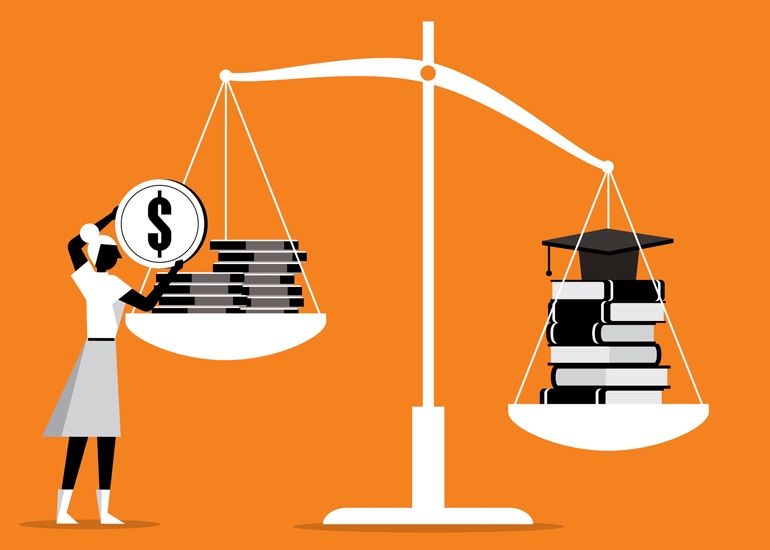
District boundaries also divvy up school funding unequally. Because local property taxes account for a large pot of money for education, communities with higher home values can raise more money for schools. This creates a chicken and egg conundrum for segregation: more affluent families strive to purchase homes in well-resourced districts, further contributing to the resource pool—and to segregation. Punitive school accountability systems fail to account for unequal funding and segregation. Instead, they stigmatize under-resourced schools where we often have concentrated racialized poverty as a result of past and present policy choices. These dynamics came to a head under the Youngkin administration. The Board of Education agreed to raise the student cut scores on high stakes tests absent meaningful increases in school resources. A simulation of the proposed accountability changes found that roughly two out of three schools in Virginia would be labeled “off track.” Damaging labels would drive families with choices away from these schools and make segregation worse.
But a different sort of school accountability is possible. We could measure and report out on segregation and unequal funding. We could ask the state and districts to create plans for addressing segregation and inequality. This would shift our focus to first examining what we put into our schools in terms of resources, rather than what comes out in the form of student test scores. Accountability for student outcomes—with test scores as one measure of many—would remain important, but no longer the sole focus.
In the classroom, the work of supporting students’ civil rights in the present could take many forms. It might look like educators creating and participating in trainings that nurture classroom communities where all students feel like they belong. It could take the form of educators collecting and making meaning of their own data about second generation segregation issues like discipline and access to advanced coursework. And it could look like educators banding together to teach the fullness of our complex and troubled history within the bounds of the current standards.
Ideas for how we might expand student civil rights in our state (and others) could seed new proposals for rebuilding the federal machinery for civil rights oversight and enforcement. State-by-state efforts cannot replace uniform and universal protections for students across the country. But in the meantime, states must summon the will to act as a civil rights bulwark against a federal government that has lost its way. The preservation of a multiracial democracy for rising generations of students depends on it.
Genevieve Siegel-Hawley, PhD, is a professor of educational leadership at Virginia Commonwealth University, where she examines segregation and educational opportunity in and between urban, suburban, and exurban school districts. She is the author of two books on the subject: When the Fences Come Down and A Single Garment: Creating Intentionally Diverse Schools that Benefit All Children. She’s also a member of a multidisciplinary research team studying resistance to civil rights rollbacks in education during the Trump era. Finally, she was a proud student and teacher and now a parent in Richmond Public Schools.
According to a poll conducted by Virginia Commonwealth University, 66% of Virginians say public schools do not have enough funding to meet their needs.
Learn More